And its Effect on Mental Health
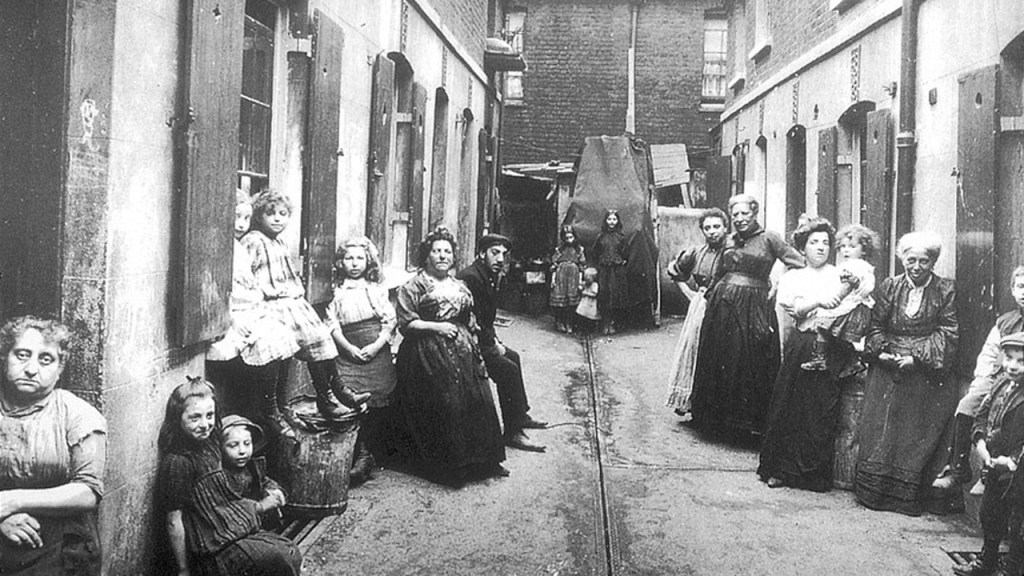
The awful housing conditions in which most working class people in the Victorian and Edwardian period UK lived must have been a huge influencer on the numbers of people in our nation with mental health problems. For many of these people the County Asylums were, at least initially, an improvement on living conditions at home and also an improvement on access to food, hygiene and sanitation.
Rural Housing Living Conditions
In Victorian Britain, working-class rural housing was often characterized by cramped, unsanitary conditions, with little access to basic amenities. Many lived in “two up, two down” cottages, sometimes in rows, lacking proper sanitation and clean water. These dwellings were frequently damp and poorly maintained, with leaking roofs and dirt floors.
Cramped Spaces
Rural cottages were often small, with limited space for large families. A “two up, two down” layout (two rooms downstairs and two upstairs) was common.
Lack of Sanitation
Outdoor toilets (privies) were often shared between multiple families, and there was no running water or indoor plumbing.
Poor Ventilation and Hygiene
Homes were often damp, with dirt floors, and prone to infestations of vermin and lice.
Shared Accommodation
In some cases, families might share a single room, and lodging houses in rural areas were also common for single labourers.
Limited Amenities
Stoves were expensive, so many families lacked proper cooking facilities, and washing often occurred in cold water from a pump.
Health Risks
The combination of poor sanitation, inadequate living conditions, and limited access to healthcare contributed to the spread of diseases.
Insecure Housing
Many labourers lived in tied cottages, meaning their housing was linked to their employment. If they lost their job, they also lost their home.
Factors Influencing Housing
Nature of Work
Weavers and knitters, who worked indoors, needed more space than farm laborers who spent most of their time outdoors.
Landowners’ Attitudes
While some landowners provided decent cottages, many were indifferent to the conditions of their workers’ housing.
Availability of Materials
In some areas, cottages were built with wattle and daub or mud and stud, while others were constructed from brick.
Government Regulations
The government introduced laws to improve sanitation, such as requiring toilets in all houses, but these were not always effectively enforced.
Urban Housing LIVING CONDITIONS
Victorian and Edwardian housing conditions in the UK varied greatly, but generally, the working class faced severe overcrowding and poor sanitation, while the middle and upper classes enjoyed more spacious and comfortable homes.
Overcrowding
Working-class families often lived in one or two-room dwellings, sometimes sharing a single room with multiple family members.
Poor Sanitation
Lack of running water, shared toilets, and inadequate waste disposal led to unsanitary conditions and the spread of diseases.
Damp and Lack of Ventilation
Houses were often poorly constructed with thin walls and limited ventilation, leading to dampness and respiratory illnesses.
Back-to-back houses
These were common, especially in industrial areas, and offered little privacy or ventilation.
Single people or families might rent rooms in large, subdivided houses, sometimes with very basic facilities.
Disease
Overcrowding and poor sanitation contributed to the spread of diseases like cholera, typhoid, and tuberculosis.
Link to BBC Bitesize article “Industrial Britain and the people’s health, c.1750-c.1900” specifically Living Conditions, Housing and Food. With thanks to the BBC.
Link to BBC Bitesize article “Industrial Britain and the people’s health, c.1750-c.1900” specifically Living Conditions – Waste and Water. With thanks to the BBC.
In Victorian times – The political parties did not significantly differ in their approaches to the housing issues. No matter if legislation had a Liberal or Tory source, the two sacred cows that were on no account to be slaughtered were the sanctity of private property, and the self-reliance of the poor. Concern that the poor should not be ‘de-moralised’ by being given any help salved the conscience of many who had property rights that were well worth protecting.
With thanks to Sarah Wise, author of The Blackest Streets, for the part of the previous paragraph in italics.
Sarah’s outstanding book gives a real insight into a part of London called the Old Nichol, a very small area of the East End that had appalling living conditions and extremely high death rate but was mostly owned by “absent slumlords” who included peers of the realm, churchmen and local politicians. It could be taken as a metaphor for many similar areas all over the UK at the time.
CONCLUSIONS
When we read the summary information in this Rural and Urban Housing and Living Conditions section of our web site, and couple it with the information, especially the Mental Health part, in our website section titled The Unclaimed People Buried in St. Francis Hospital Cemetery, we hopefully further understand the severe mental stresses that the people who lived in these conditions suffered continually. We must ask ourselves how we would have mentally handled such conditions. They are in the background of many of our published stories but not immediately obvious or perhaps even at all discernible.
 Sussex Asylums Burial Grounds Project